
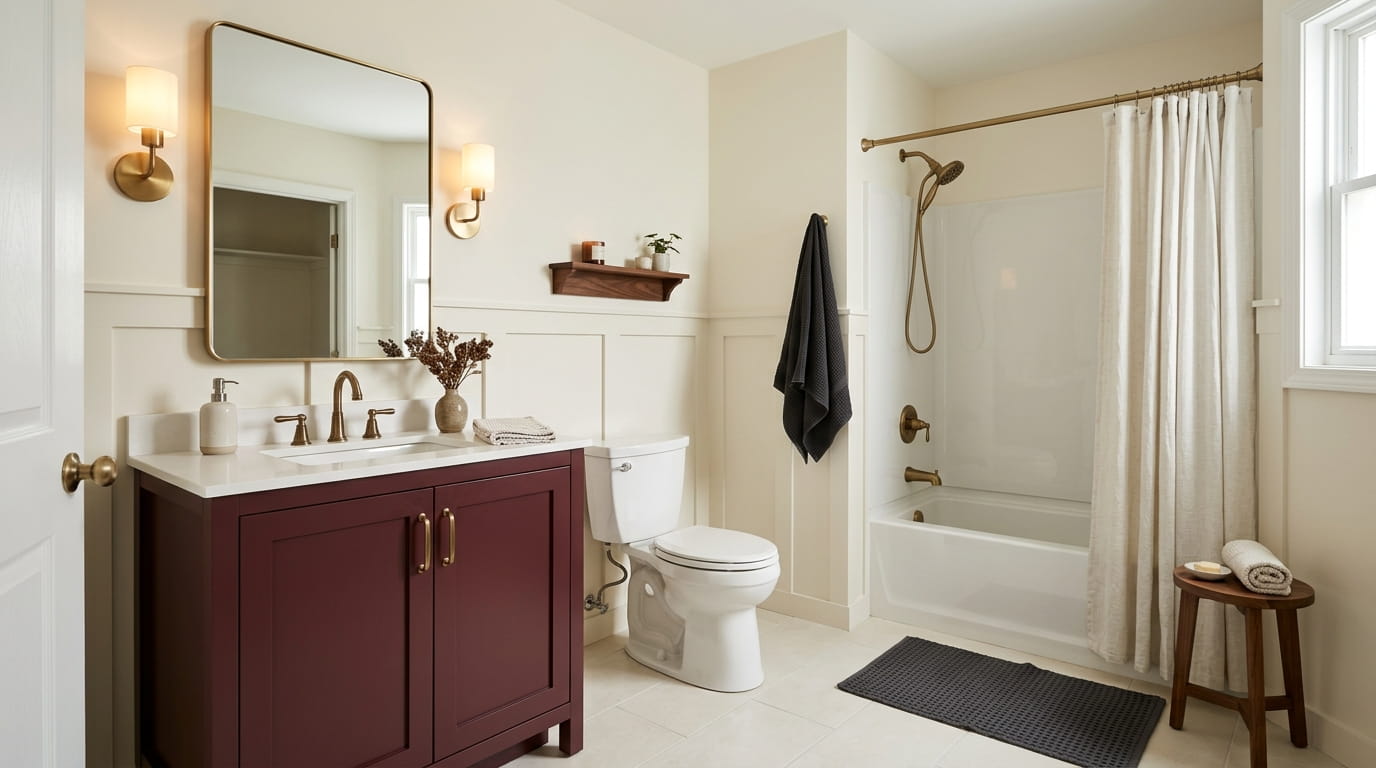
Every list of bathroom remodel ideas I’ve read online seems to end the same way: with a quote that makes you close the laptop. Full gut jobs mean new pipes, new drains, and a plumber on your calendar for weeks. Most of us just want the room to feel fresh again, without the chaos.
The good news is that a lot of the change happens on the surfaces. The tub, the floor, the mirror, the door, and the trim all shape how the room feels, and none of them require moving a single pipe. Each idea below leaves the drain, the supply lines, and the toilet exactly where they are.
Some of these take an afternoon. Others take a long weekend and a trip to the hardware store. I’ve noted the rough effort on each one so you can pick what fits your budget and your patience. If money is tight, start with the thing that bothers you most every morning, since that’s the one you’ll notice every day.
1. Reglaze the Tub Instead of Replacing It

A cracked, yellowed tub makes the whole room look tired, even when everything else is in decent shape. Replacing it means demolition, new drain work, and a lot of dust. Reglazing skips all of that. A pro applies a new finish over the existing surface, and the tub stays on the same drain.
Before you book anyone, check for:
- Deep cracks or loose chips, which won’t hold a new coating
- Mold in the caulk lines that needs cleaning first
- A written warranty on the finish
Plan to keep the room closed off for a few days while the coating cures.
Yellowed enamel, a worn spot near the drain, and a tub that looks dated no matter how well you clean it.
A glossy, even white surface on the same tub, with no new plumbing behind the wall.
2. Swap the Faucet Without Touching the Supply Lines
A new faucet can change the whole sink area in an afternoon. Start with the shutoff valves under the sink, since they make this job simple. If they close fully and hold, you can work without opening a wall.
Measure the hole spacing before you shop. A three-hole vanity and a single-hole sink need different models, and this is the detail people forget most often. Keep a towel and a small bucket under the sink, since some water always sits in the lines.
Close both shutoff valves under the sink, then run the faucet until the water stops.
Disconnect the old supply lines and loosen the mounting nuts to lift out the old faucet.
Set the new faucet, then tighten the mounting nuts from underneath until it sits firm.
Reconnect the lines, open the valves slowly, and check each joint for drips with a dry paper towel.
3. Add Board and Batten to the Bottom Half of One Wall
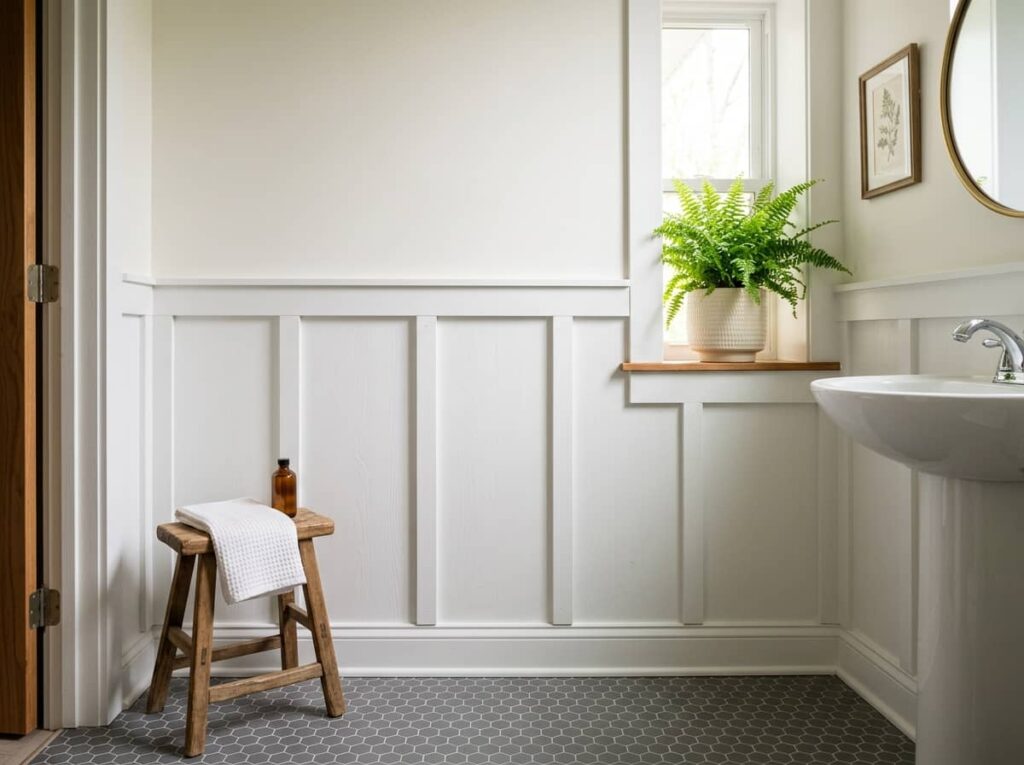
Stand in the doorway and look at a plain painted wall. It often looks flat. A row of narrow boards along the lower part adds depth without any structural work. The boards attach to the existing drywall, so the plumbing and wiring stay hidden behind it.
Mark one level line about a third of the way up and keep it straight all the way around. Use trim rated for damp rooms, seal every cut edge before you paint, and caulk the seams where the boards meet the wall. Skip the section directly behind the tub or shower, where water splashes and sits.
4. Cover the Floor With Vinyl Instead of Tearing Out Tile
Old tile can look fine from across the room and still feel dated up close. Pulling it up means dust, debris, and a subfloor that may need repair. Vinyl goes right over a smooth, clean, flat floor, so you skip the tear-out.
Check the door clearance first. An extra layer can make the bottom of the door drag, so measure before you buy. Choose peel-and-stick for a small powder room and click-lock for a larger bathroom where you want a more solid feel.
| Peel and Stick | Click Lock |
|---|---|
| Installs in a few hours | Takes a full afternoon or more |
| Needs a very smooth, clean subfloor | Handles small dips better |
| Best for small powder rooms | Best for larger bathrooms |
5. Paint the Vanity in Bathroom-Rated Enamel
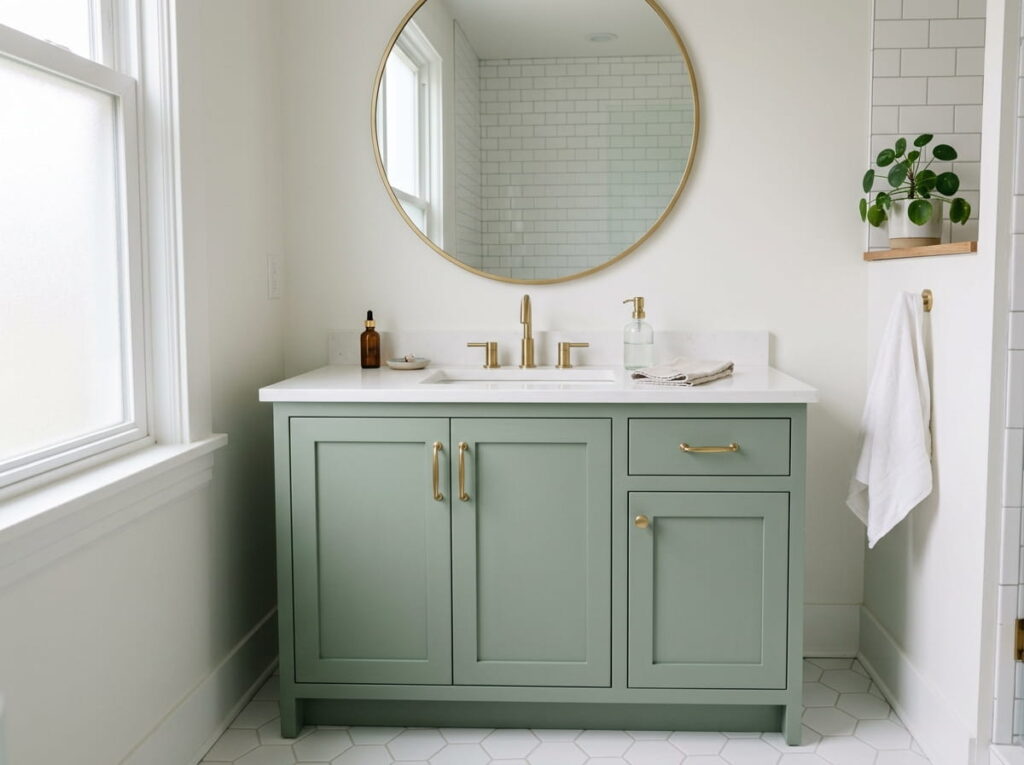
A vanity is often the biggest flat surface in the room, so paint makes a loud change for not much money. Regular wall paint won’t hold up to splashes and daily wipe-downs, though. It tends to soften and peel right where your hands rest.
Use a bonding primer and a bathroom-rated enamel. Scuff sand the surface lightly, wipe off the dust, and let each coat dry fully before you put the doors back on. Give it a few days to cure before anything heavy goes on the top.
Use bathroom-rated enamel over a bonding primer.
Scuff sand and wipe clean before the first coat.
Regular wall paint, which softens near the sink.
Painting over a damp or greasy surface.
6. Refresh the Toilet With a New Seat and Tank Lid
The toilet is the one fixture most people never think about until it looks worn. A new seat and lid change the look for about the cost of a takeout dinner. Because the bowl and supply stay in place, nothing behind the wall gets touched.
Most seats fit standard bowls, but the mounting bolts vary. Check whether your bolts are at the back of the bowl or the front before you buy. A soft-close seat is a small upgrade that makes a real difference in a busy house.
💡 Quick Tip
Measure the distance between the seat bolts before you shop. Round bowls and elongated bowls use different seats, and this one measurement saves a return trip.
7. Hang a Larger Mirror Over the Existing Vanity

A small mirror can make a bathroom feel like an afterthought. Going bigger changes the proportion of the whole wall, and it helps light bounce around the room. You don’t need to move the vanity or the outlet to do it.
Aim for a mirror that’s about as wide as the vanity, or a little narrower. Hang the bottom edge roughly 4 to 6 inches above the backsplash so it doesn’t crowd the faucet. If you have a light fixture on the wall, leave it in place and let the mirror sit between the two.
8. Refresh Dingy Grout Instead of Retiling
Grout turns gray and stained long before the tile wears out. Regrouting a whole wall sounds like a big job, but many people only need to refresh the lines near the tub and the floor. The tile stays exactly where it is.
Start by scrubbing with a stiff brush and a cleaner made for grout. If the color still looks tired, a grout pen or a sealed colorant can give it a clean line. Give it a full day to dry before you run water across it.
What to grab first
9. Raise the Shower Curtain Rod Near the Ceiling
A standard curtain at the usual height can make a shower look cramped. Hanging the rod higher draws the eye up and makes the ceiling feel taller. It’s a small move with a big effect on how the room feels.
Mount the rod as close to the ceiling as the frame allows, then hang a longer curtain so the hem sits just above the tub floor. Tension rods work for light use, but a sturdy mounted rod holds better with a heavier liner.
Hang the rod high and the room instantly feels taller, even before you touch anything else.
10. Swap a Swing Door for a Slim Barn Door

A swing door can eat up floor space in a small bathroom, and it needs room to open. A barn door slides along the wall instead. It works especially well when the door opens into a tight hallway.
Make sure the wall beside the door is solid enough to carry the track. Measure the door opening and buy a kit sized for it, then check that the door won’t hit the toilet or the vanity when it slides. Plan for a slightly narrower privacy setup, since barn doors don’t latch the way hinged doors do.
⚠️ Watch Out
Confirm the wall can hold the track before you mount it. A track that pulls loose can drop a heavy door, so use studs or a rated bracket.
11. Replace the Vanity Top Only If the Sink Cutout Matches
A new countertop can make an old vanity look like a different piece of furniture. The catch is the sink hole. If the new top has the same cutout size and spacing as the old one, the drain and supply lines line up, and nothing behind the wall has to move. If the cutout is off by even an inch, you’re into plumbing and possibly cabinet work.
Pull the old top off first and measure the sink opening and the faucet holes. Bring those numbers to the store. Many vanity tops come with the sink already set in, which keeps the install simple.
A scratched laminate top with stains around the sink and a faded, dated edge.
A clean solid surface with a fresh sink, sitting on the same cabinet and the same plumbing.
12. Five Questions to Ask Before Any Bathroom Purchase
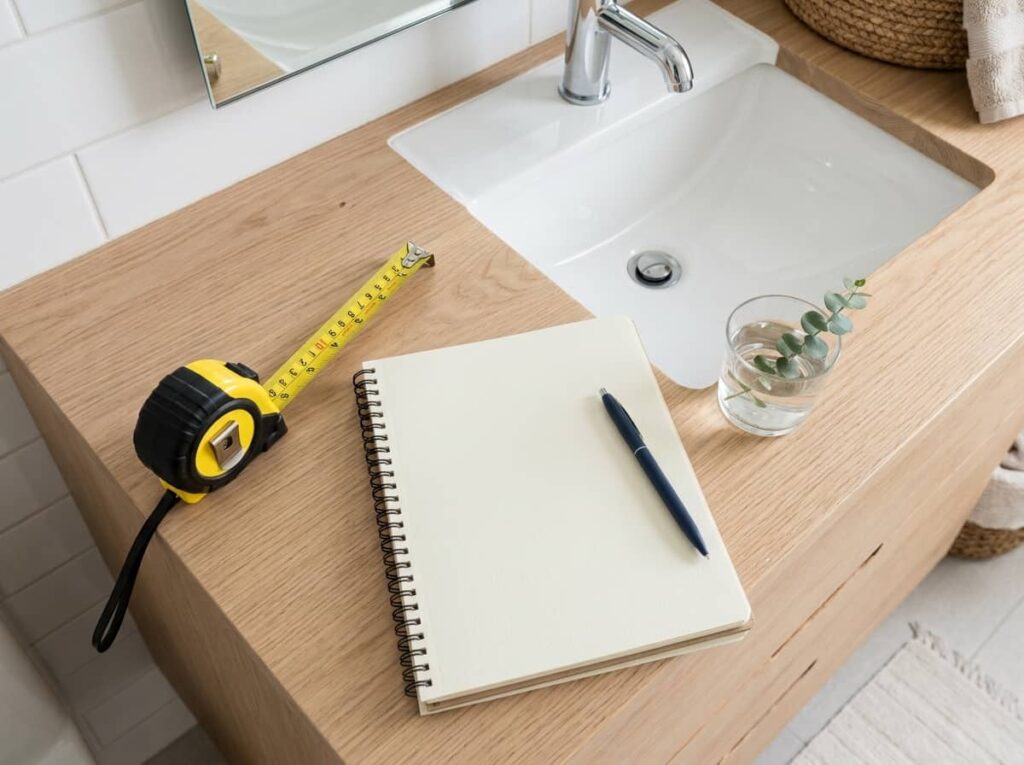
Shopping for a bathroom update is fun until a delivery shows up that doesn’t fit. A short check before you buy saves a lot of return trips. Most of these answers take a few minutes with a tape measure and a look under the sink.
Walk through the questions in order. If any answer is “I’m not sure,” stop and measure again before you click buy.
Check these before you buy
Conclusion
Bathroom remodel ideas don’t have to start with a wall. Reglazing, new fixtures, paint, vinyl, and a few smart swaps can change how the room feels without touching the pipes. The trick is to start with the surface that bothers you most and work outward from there. A small change you use every day often does more than a big project you put off.
Keep the checklist handy before each purchase, and take your time with the measurements. That one step prevents most of the regrets people have after a makeover.
Leave a Reply