
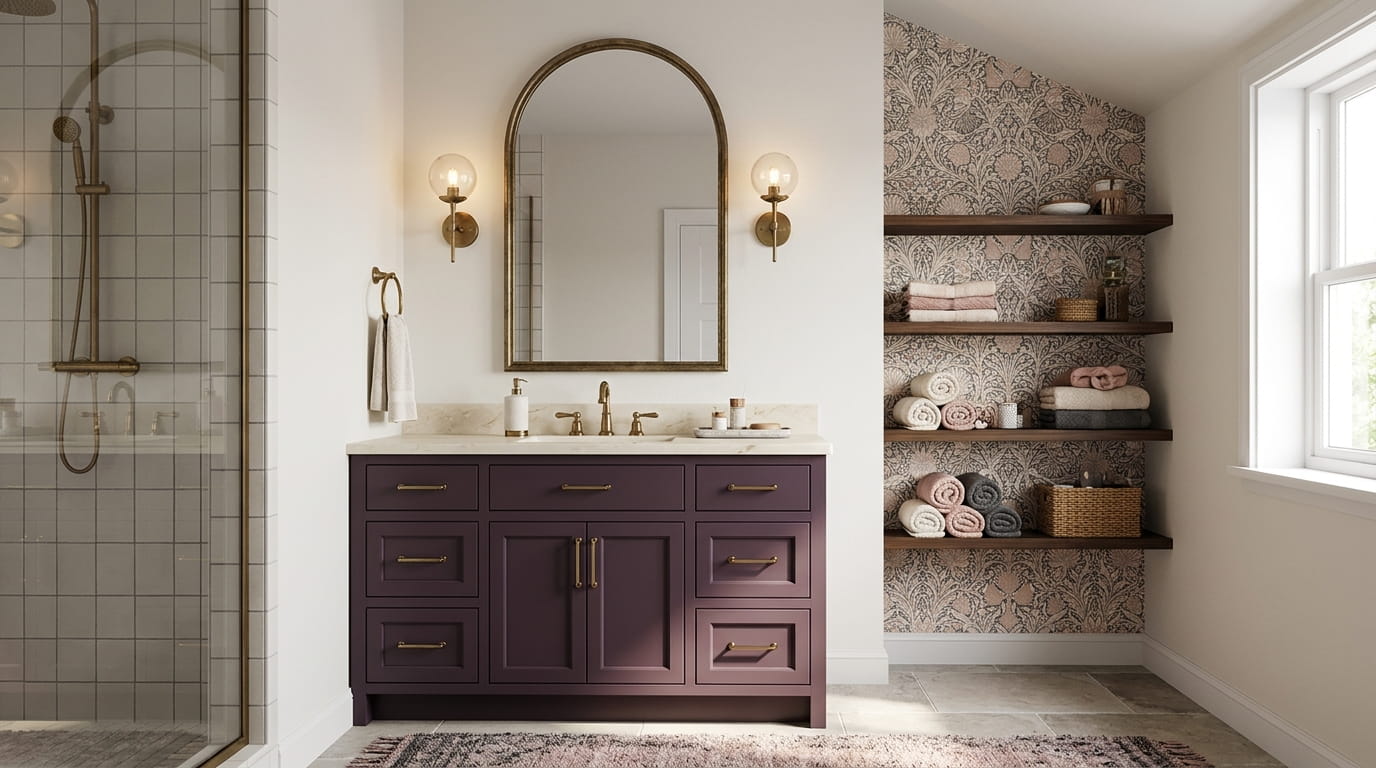
Most bathroom renovation inspiration assumes you have fifteen thousand dollars and six weeks to spare. Real life rarely works that way. Maybe the grout is stained, the lighting is bad, or the vanity has looked tired since you moved in, but a full gut job is not in this year’s budget.
That gap between what you want and what you can actually spend is where good bathroom makeover ideas live. Some of the best changes cost almost nothing and take an afternoon. Others are a real investment but still cost less than ripping out the whole room.
This list moves from the cheapest, fastest fixes up to bigger projects worth saving for. Pick the ones that match your actual bathroom and your actual weekend, not someone else’s renovation budget.
1. Paint the Vanity Instead of Replacing It

A new vanity runs several hundred dollars before you even add a countertop. Priming and painting the one you already have costs under fifty dollars and takes a weekend.
Use a bonding primer made for laminate or wood, two thin coats of cabinet paint, and swap the hardware last so the new pulls sit against a clean finish. Skip spray paint from a can. It chips within months.
2. Swap Builder-Grade Hardware for a Finish That Actually Matches
Most builder homes ship with chrome or brushed nickel hardware picked for cost, not style, and it rarely matches anything else in the room.
New cabinet pulls, a towel bar, and a toilet paper holder in one consistent finish change the whole feel of the room for well under a hundred dollars. Matte black, brushed brass, and warm pewter all read as more current than shiny chrome right now. Buy one extra pull in case you drop one down the drain while installing.
💡 Quick Tip
Measure your current pull spacing before ordering new hardware so you don’t have to drill new holes.
3. Add a Floating Shelf Above the Toilet for Instant Storage

A small bathroom loses storage fast, and the wall above the toilet usually sits empty. One or two floating shelves there add real storage without touching the floor plan.
Stick to shallow shelves, six to eight inches deep, so they don’t crowd the space when you stand up. Stack folded towels, a small plant, and a woven basket for extra toiletries. Anchor into a stud or use heavy duty drywall anchors since this spot takes daily use.
4. Reglaze the Tub Instead of Tearing It Out
A lot of people assume a chipped or dated tub means a full replacement. Reglazing, also called refinishing, resurfaces the existing tub with a new coating and usually costs a fraction of swapping it out.
It is not a permanent fix. A reglazed tub typically lasts eight to fifteen years with careful use, while a new tub lasts decades. For a rental or a starter home, that trade often makes sense.
| Reglaze | Replace |
|---|---|
| Lower cost, usually one day | Higher cost, often several days |
| Lasts roughly 8 to 15 years | Lasts several decades |
5. Trade the Builder Mirror for a Framed One

A plain rectangle mirror glued straight to the wall is one of the clearest signs a bathroom hasn’t been updated since it was built.
Framed mirror kits clip right over the existing glass in under an hour, no removal needed. Pick a frame finish that matches your new hardware so the room feels planned instead of pieced together. For a bigger change, hang a fully new mirror in an arch or round shape instead.
A plain, edgeless mirror glued flat against the wall.
A clipped-on frame that makes the mirror look custom.
6. Use Peel-and-Stick Tile for a Backsplash That Isn’t Permanent
Removing tile isn’t realistic in a rental, but a bare wall above the counter still looks unfinished next to a nice mirror and new hardware.
Peel-and-stick tile sheets solve that without a trowel or grout. Clean the wall, let it dry fully, and press the sheets starting from a level center line so pattern lines stay straight.
Grab these before you start:
What to grab first
7. Don’t Just Buy Any Rug for a Cold Bathroom Floor

Cold tile underfoot is one of the first things people notice in an older bathroom, but not every rug actually helps.
A plush rug that sits flat and absorbs water near the tub is doing real work. A thin decorative rug with a rubber backing that traps moisture underneath just grows mildew out of sight. Check the care label before buying. If it says spot clean only, it won’t survive bathroom humidity for long.
Choose machine washable cotton or chenille.
Lift and air out the backing weekly.
Rubber-backed rugs that trap moisture underneath.
Anything labeled spot clean only.
8. Replace the Shower Curtain With a Glass Half Wall
A shower curtain pools water on the floor, clings to your arm mid-rinse, and never quite seals the gap at the end of the rod.
A half wall of glass, installed without a full enclosure, fixes the splash problem and makes a small bathroom feel more open. It costs more than a curtain but far less than a full glass shower door. Worth it for anyone who showers daily and is tired of washing a moldy liner every few months.
- ▸Blocks splash without boxing in the whole shower.
- ▸No liner to scrub or replace every few months.
- ▸Reads as a bigger upgrade than the price tag suggests.
9. Re-Grout and Re-Caulk Before You Spend On Anything Else

Grout lines show every year of wear a bathroom has been through, and no other surface ages a room faster than cracked, yellowing caulk around the tub.
This is the one project to do first, before paint or new fixtures, because new hardware next to grimy grout still looks neglected. Score out the old caulk with a utility knife, scrub the grout lines with a stiff brush and a baking soda paste, then lay a fresh, thin bead of caulk.
Fresh grout and caulk cost under thirty dollars and make every other upgrade in the room look newer.
10. Add a Statement Light Fixture Above the Mirror
Lighting changes how a mirror reflects more than almost anything else in the room, and most builder fixtures give off a flat, slightly yellow glow that makes skin tone look tired.
Swap in a fixture with a wider light spread, ideally in a warm white bulb around 2700K to 3000K, and mount it at eye level rather than above the mirror frame where it casts shadows under the eyes. A quick change, but one people notice the first morning after.
💡 Quick Tip
Turn off overhead lighting when you check the fixture’s glow. Vanity light should work on its own.
11. Trade the Towel Cabinet for Open Shelving
A bulky towel cabinet in a small bathroom eats floor space and usually sits half empty except for the bottom shelf.
Open shelving in the same footprint holds just as much, if not more, and makes the room feel less boxed in. Roll towels instead of folding them flat so they sit uniform on the shelf, and keep the top shelf for anything you reach for daily.
A bulky cabinet with a half-empty bottom shelf eating floor space.
Open shelves with rolled towels that make the wall feel lighter.
12. Paint the Ceiling a Color Instead of Leaving It White
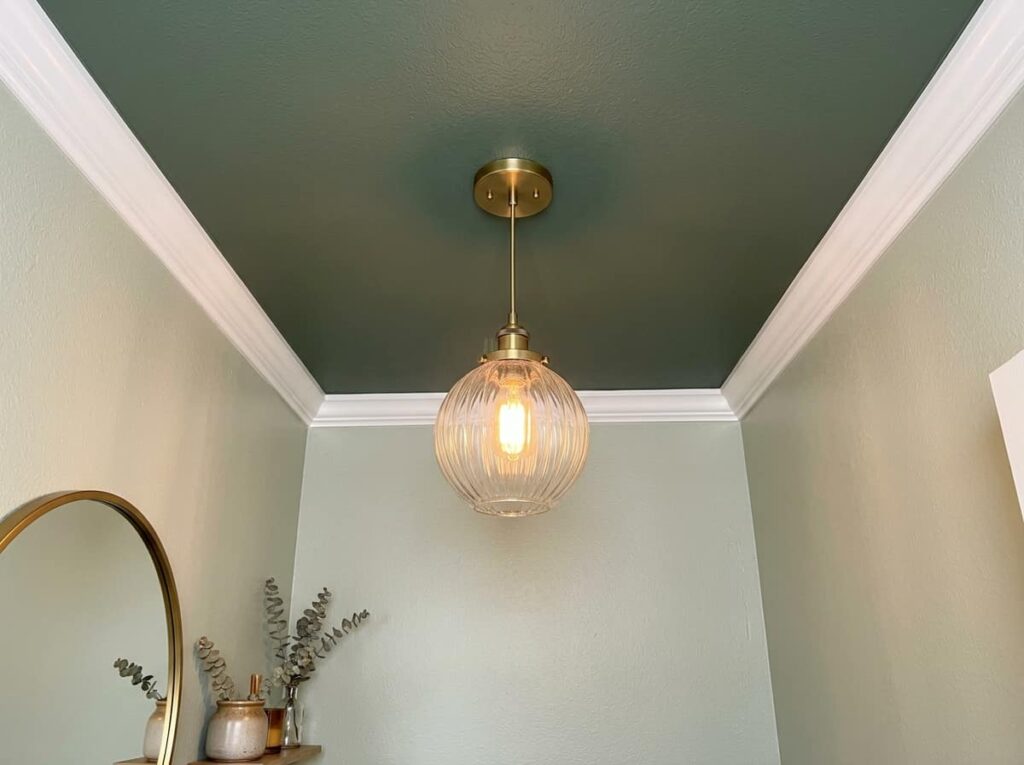
Most people paint the walls and stop, but a plain white ceiling in a small, windowless bathroom can make the room feel like an afterthought.
Here’s the simple way to do it right:
Pick a shade a step or two darker than the walls, not a contrasting color.
Use a flat or matte finish so it doesn’t show roller marks under light.
Cut in around the fan and fixture first, then roll the open space.
A small room gains a sense of height and intention this way, something a flat white ceiling never quite manages.
13. Upgrade a Standard Showerhead to a Rain Shower Panel
The showerhead that came with the house is usually the cheapest option a builder could install, and it shows in the weak, narrow spray.
A rain shower panel mounts in place of the old arm in under an hour for most standard setups, no plumber required if your water lines are already in place. It is one of the few upgrades where the difference is felt daily, not just seen.
14. Use Quartz Remnants Instead of a Full Slab Countertop
A full quartz slab is one of the priciest line items in any bathroom project, but most fabrication shops sell leftover remnant pieces at a steep discount.
A bathroom vanity rarely needs more than a few square feet, which means a remnant almost always covers it.
| Remnant Piece | Full Slab |
|---|---|
| Often half the cost or less | Full retail price per square foot |
| Limited color and pattern choice | Full range of colors available |
Call a few local fabricators directly. Remnants rarely make it online.
15. Hang Wallpaper in the Powder Room for the Biggest Impact Per Square Foot
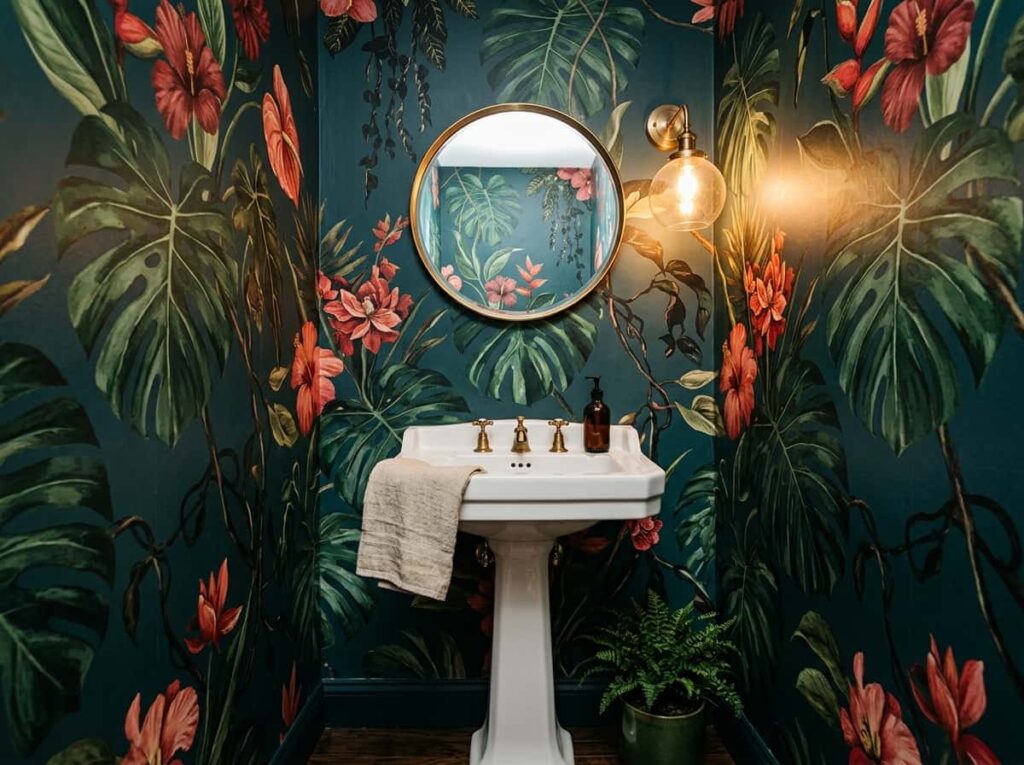
A powder room is the one space in the house where a bold, busy wallpaper actually works, because there’s no shower steam to peel it and no large surface area to overwhelm the room.
This is where a small budget goes the furthest. A single roll or two can fully wrap a powder room, which is not true in a full bath or primary bathroom.
Conclusion
A bathroom doesn’t need a full renovation to feel new again. Fresh grout, a painted vanity, better lighting, and a few swapped fixtures can change how the whole room feels without touching the layout or the budget you actually have. Start with the cheapest, fastest items on this list, the ones that cost under fifty dollars and take a weekend, and let those changes tell you where to spend more later.
The biggest shift usually isn’t one dramatic update. It’s a handful of small, specific choices that finally match the rest of your home. That’s the real goal behind any bathroom makeover ideas worth trying: a space that looks cared for, not just redone.
Leave a Reply