

Most bathroom vanity shopping starts with color and finish, and ends with a surprise two years later when the cabinet door swells near the sink or the laminate edge starts peeling. The finish is the last decision that matters. What the vanity is actually built from decides whether it survives steam, splashes, and the occasional forgotten puddle.
There are more bathroom vanity materials on the market than most buyers realize, and the showroom floor rarely explains the difference between what’s structural, what’s a surface laminate, and what’s solid all the way through. Some materials handle humidity without flinching. Others look identical on day one and start failing by year three, usually right where water actually lands.
This isn’t a ranking of which material is “best.” It’s a breakdown of what each one actually does once it lives in a room with a running faucet, so you can match the material to how the bathroom gets used, not just how it looks under store lighting.
1. Solid Wood: The Classic Choice That Needs the Right Sealant
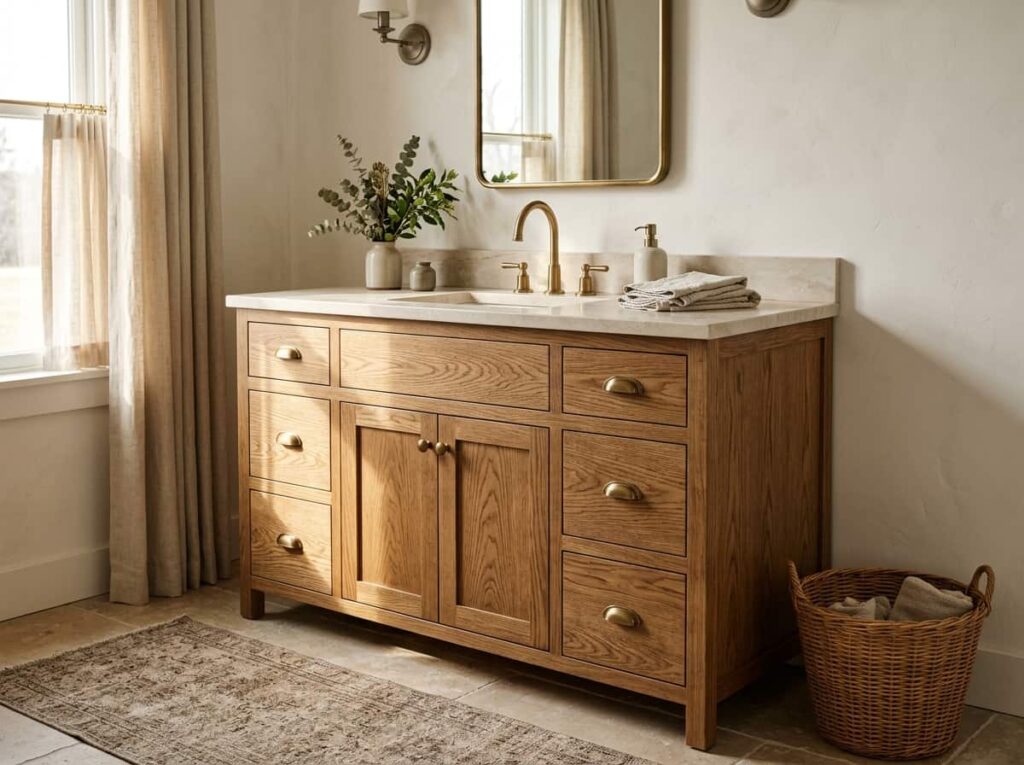
Water pools at the base of a wood vanity before it pools anywhere else, right where the door meets the floor.
• Needs a sealed polyurethane finish, not just stain
• Oak and maple outlast softer woods like pine in humid rooms
• Resealing every two to three years keeps joints from swelling
Solid wood costs more than manufactured options, but it’s the one material on this list you can sand and refinish instead of replacing.
2. Plywood: The Sturdy Workhorse Hiding Behind Most Vanities
A lot of buyers assume plywood is plywood, then wonder why the cabinet box swells two years later. Interior-grade sheets are fine for closets, not for a box that sits inches from a running faucet.
- Check for an exterior or marine-grade stamp on the sheet edge
- Confirm the glue line is rated for moisture, not just the top veneer
- Ask the builder which grade went into the cabinet box itself, not just the doors
Plywood isn’t glamorous, but it’s the structural layer doing the real work under whatever material sits on top.
💡 Quick Tip
Look for a grade stamp on the sheet edge before you buy. “Exterior” or “marine” grade means the glue between layers is rated for moisture, not just the top veneer.
3. MDF: Smooth and Paintable, But Water Is Its Enemy
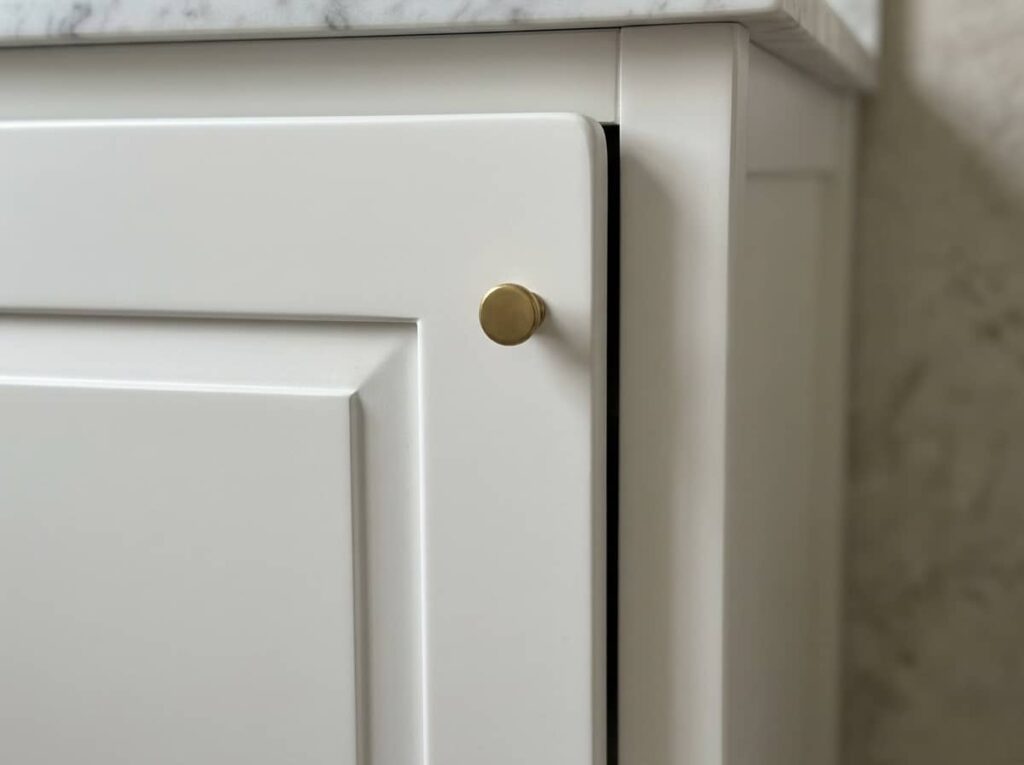
People hear MDF and picture cheap. It’s actually one of the smoothest surfaces for painted vanity doors, with none of the wood grain showing through a coat of paint. The weak spot is the edge.
Good for: painted shaker or flat panel doors
Risky for: any edge left unsealed near a sink cutout
A sealed edge survives normal splashes without issue. An unsealed one swells within a season near a dripping faucet, and once MDF swells it doesn’t shrink back down.
Seal every edge, including the back and bottom of the door.
Choose MDF for flat panel or shaker doors you plan to paint.
Placing an MDF vanity top directly under a dripping faucet.
Leaving a cut edge unsealed near the sink opening.
4. Particleboard and Melamine: When Budget Actually Makes Sense
Here’s the rule: particleboard works fine as long as water never reaches it, so the real question is about your sink setup, not the material itself.
• Good match for a vessel sink with tight, well-sealed caulking
• Risky under an undermount sink where water can wick along the cutout
• Fine for a rental unit or a guest bathroom that gets light use
Melamine’s plastic coating resists stains and wipes clean fast, which matters more than people expect once toothpaste and hairspray start building up on the surface.
Before you choose particleboard or melamine
5. Thermofoil: Looks Great New, Ages Differently Near Water

New thermofoil looks almost identical to painted wood, with a smooth, seamless finish that hides every edge. The difference shows up near the sink, where heat and steady steam can lift the vinyl layer at the seams over a few years.
Keep it away from anywhere a curling iron gets set down, and wipe spills quickly instead of letting water sit on the edges. It’s a reasonable pick for a guest bath that sees light, dry use, less so for a humid primary bathroom shared by a family.
Smooth, seamless vinyl finish with no visible seams or grain.
Vinyl starts lifting at the seams near heat and steady steam exposure.
6. Laminate: The Durable Middle Ground Most People Skip
People lump laminate and thermofoil together, but they hold up differently where it counts. Thermofoil is a vinyl layer wrapped around MDF. Laminate is a harder plastic sheet bonded under high pressure, which makes it more resistant to heat and scratches near the sink.
The tradeoff shows up at the edges. Laminate seams are visible if you look closely, while thermofoil hides them completely. For a bathroom that gets heavy daily use, that visible seam is a fair trade for a surface that won’t lift over time.
| Laminate | Thermofoil |
|---|---|
| Visible seams, more heat resistant | Seamless look, softens near heat |
| Holds up well long term near steam | Can lift at edges after a few years |
7. Quartz: The Low Maintenance Favorite for Busy Bathrooms
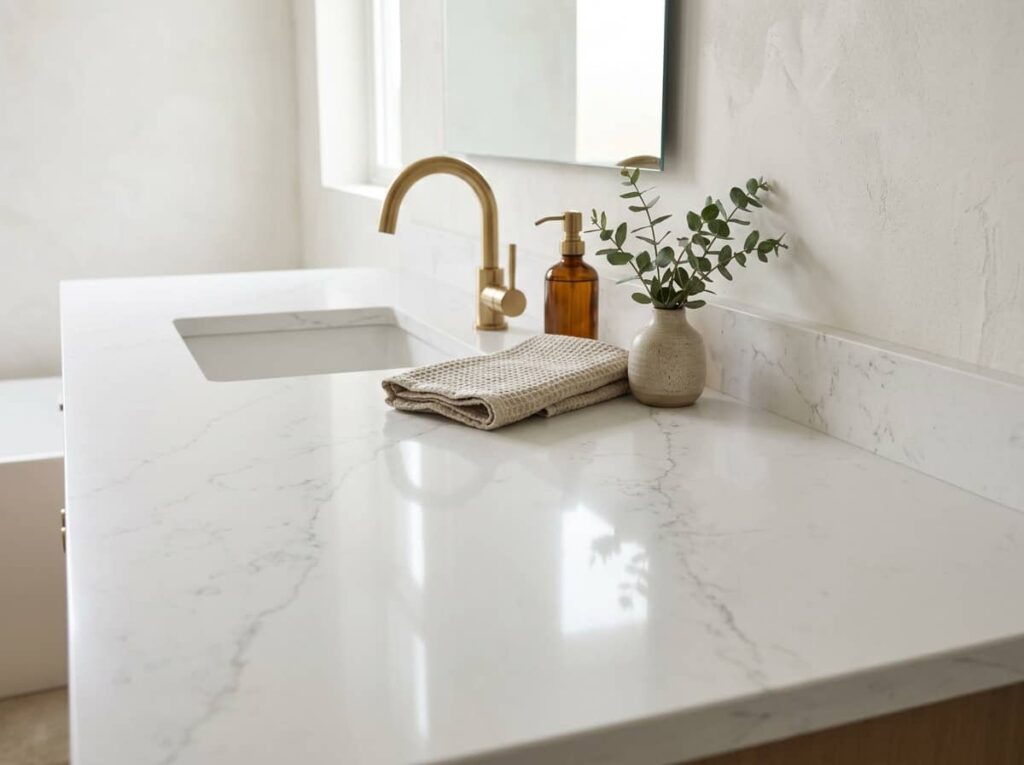
The mistake most buyers make with quartz is treating it like granite and sealing it every year. Quartz is engineered stone, so it’s already nonporous straight from the factory.
That nonporous surface is why it resists staining from makeup, toothpaste, and hard water spots without any yearly upkeep. It costs more upfront than laminate but less than most natural stone, which makes it the material people land on when they want to stop thinking about maintenance altogether.
8. Granite: Natural Beauty That Asks for Annual Upkeep
Granite follows one simple rule: reseal it once a year, whether the counter looks fine or not. The sealant wears down slowly and invisibly, so waiting until you see staining means you’ve already waited too long.
Run the water test every few months. Splash a few drops on the surface and watch what happens:
- Beads up and sits on top: the seal is still working
- Soaks in and darkens the stone: it’s time to reseal
Skip this step and granite stops being low maintenance fast.
💡 Quick Tip
Mark a yearly reminder for resealing instead of waiting for visible staining. By the time you see a stain, the sealant has already failed.
9. Marble: Stunning, Porous, and Honest About Its Limits

Marble isn’t fragile so much as it’s honest. Every water ring and etch mark from a dropped bottle of mouthwash stays visible, because the stone is naturally porous and reacts to acidity.
That’s not a flaw to hide, it’s just what the material does. People who choose marble anyway tend to be the ones who’ve made peace with a living surface that shows its age, rather than chasing a flawless counter for ten years straight.
Marble will show every mark over time. Choose it because you want that lived-in look, not despite it.
10. Quartzite: The Natural Stone People Mistake for Marble
Here’s how to tell quartzite from marble before you buy, since showrooms often label them loosely.
- Scratch test: quartzite resists a key scratch, marble usually doesn’t
- Price check: quartzite typically costs more than marble of similar size
- Ask the supplier directly whether it’s metamorphic quartzite or dolomitic marble sold under a quartzite name
Quartzite gives you the marble look with real durability behind it, which is why it quietly sells out first in a lot of showrooms.
Try a scratch test with a key or coin on an unseen edge.
Compare the price against marble of the same slab size.
Ask the supplier to confirm the exact stone type in writing.
11. Solid Surface: Seamless Sinks and Scratches You Can Buff Out

Solid surface is the material built for people who hate grout lines. The counter and sink mold into one continuous piece, so there’s no seam where mildew can collect over time.
Scratches happen, but they’re not permanent. A light sanding with fine grit paper buffs most surface marks out completely, which isn’t true of stone or laminate.
Buff light scratches with fine grit sandpaper in a circular motion.
Choose it when a seamless sink and counter matter to you.
Setting hot curling irons directly on the surface.
Using abrasive cleaners that dull the finish over time.
12. Concrete: Custom Looks With a Few Things to Know First
Nobody mentions how heavy a concrete vanity top actually is until it’s time to install one, and by then it’s too late to change the cabinet underneath.
What to confirm before you order:
- Cabinet base is rated to support the extra weight
- Curing time runs several weeks, not days, before installation
- Sealing happens on a schedule, similar to granite, not a one time step
Done right, concrete gives you a completely custom shape and color that no other material on this list can match.
Before you order a concrete vanity top
13. Stainless Steel: Commercial Toughness With a Fingerprint Problem
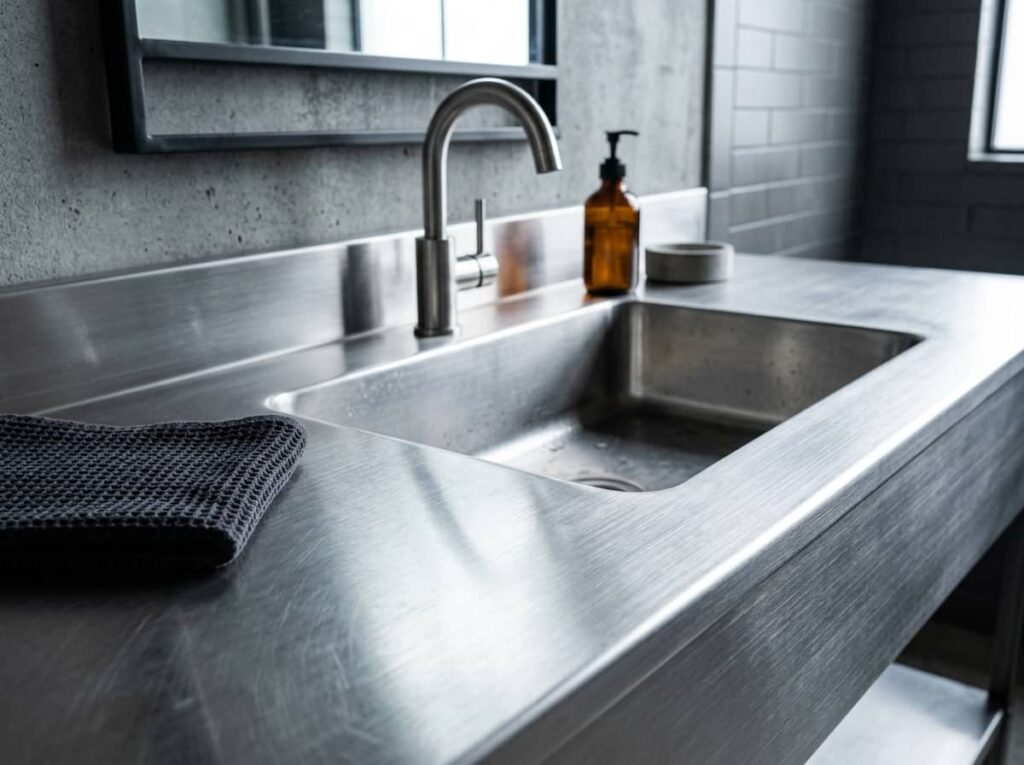
Stainless steel shrugs off water completely, which is exactly why it shows up in commercial kitchens and hospital bathrooms. Nothing about it is porous, so staining and water damage basically aren’t a concern.
The catch is fingerprints and water spots show up constantly on the matte or brushed finish, so it demands more frequent wiping than any material on this list, even though none of that wiping is about protecting the surface itself.
Conclusion
Thirteen bathroom vanity materials, and the right one for you probably came down to one question more than any other: how much upkeep are you actually willing to do. Quartz and solid surface forgive a busy schedule. Granite and marble reward people who like a little ritual with their maintenance. Wood and concrete ask for patience up front and give back character over time.
None of these materials is wrong, they just ask different things of the person living with them. Match the bathroom vanity material to how the room actually gets used, not just how it photographs, and it’ll hold up a lot longer than the first finish you liked.
Leave a Reply